Interview: Darren Lynn Bousman Returns to His Gnarled Roots with “Twisted”
After years of being handcuffed by studio executives who apparently think audiences can’t handle actual style, Darren Lynn Bousman has finally broken free with his latest film, Twisted.
Remember those razor-sharp cuts and disorienting camera gymnastics that made the Saw sequels feel like a fever dream directed by a particularly unhinged music video auteur? Yeah, studios have been actively suppressing that.
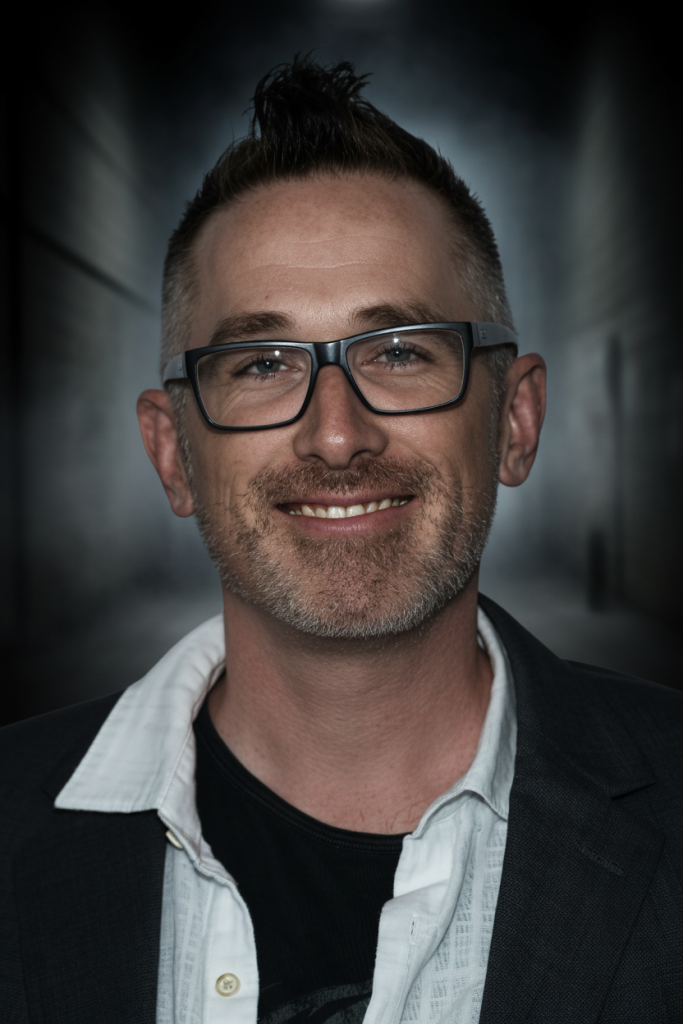
“Most [studios] don’t let me do them,” Bousman admitted, with Spiral serving as exhibit A in the case against creative neutering. “Even though we had them planned out and even shot some of them, it never makes the edit.” Translation: Hollywood bean counters are still terrified of anything that might make test audiences squirm for any reason that’s not outright blood and guts.
With Twisted, Bousman made his signature visual language non-negotiable. “So much of movie-making is not fun. It’s monotonous. It is laborious,” he explained. “So I need to find things for me that’re artistic, things that make me happy, and those make me happy.” Imagine that: a director actually enjoying directing. Revolutionary concept.
Originally titled The Monster, the film ditches the tired good-versus-evil binary for something far more unsettling. That is, moral ambiguity that actually commits to the bit. “Both characters take turns playing the monster,” Bousman explained. “They both do despicable, deplorable things. So depending on when you’re watching it, the antagonist and protagonists flip.”
Lauren LaVera’s Paloma is “using her sexuality and her cunning and conniving to basically bleed men dry.” Meanwhile, Djimon Hounsou’s character is “trying to save his wife and trying to, in some respect, better humanity.” Neither gets a hero’s journey or a villain’s mustache twist. They’re both just people making catastrophically bad decisions while convinced they’re doing the right thing.
“That’s more aligned with how people really are in real life,” Bousman noted. “I don’t think there is a true villain. Maybe Jeffrey Epstein is a true villain, but I think in reality, we’re just a series of decisions that we make. Some of those are good or some of those are bad.” It’s horror for the morally exhausted millennial age: everyone sucks here, but maybe they have their reasons?
The film’s exploration of medical ethics and desperation isn’t just philosophical window dressing. It’s ripped straight from Bousman’s own life. His father battled Parkinson’s and dementia but couldn’t access experimental treatments because of regulatory bureaucracy. That kind of helpless rage doesn’t just disappear. No, it metastasizes into art.
“What would you do if you knew there was a cure out there?” Bousman asked. “If you knew there was something that could save someone that you loved, but there were some morally questionable things to get to that point. Is it okay to break a law if it means restoring it?”
Suddenly Hounsou’s character becomes far more than a lab-coated maniac. He’s a man who watched the system fail someone he loved and decided the system could go straight to hell. “I don’t think Djimon is necessarily a villain either in this,” Bousman clarified. Just another person whose desperation led them somewhere dark.
Here’s where Twisted apparently transcends its own premise, where the gut-punch outguns the gore: the relationship between LaVera’s Paloma and Mia Healey’s Smith. Bousman lights up discussing their chemistry and the midpoint scene where their bond becomes devastatingly clear.
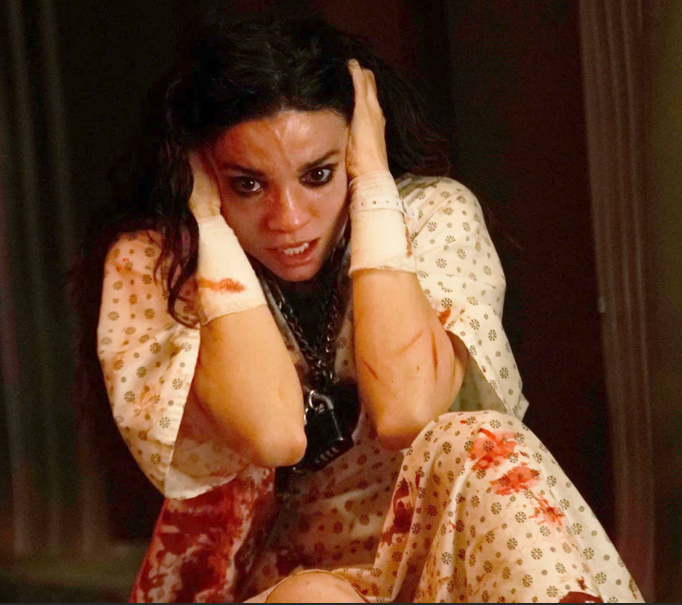
“That to me is gut-wrenching because you find two people that love each other greatly and they are the cause of their own demise,” he said. “They both made bad choices to lead them to that place. And I just think that that, to me, is more shocking than the brain stuff [in the movie] or the killing or the slicing of throats.”
In a genre that often uses queer relationships as tragedy fuel, there’s something both refreshing and heartbreaking about Bousman’s investment in this dynamic. It’s not trauma for shock value; it’s two fully realized people who understand each other better than anyone else in the world, watching themselves destroy each other.
“No one understands them more than each other,” Bousman said. “That, to me, was an interesting take on it.”
Translation: The real horror isn’t the body horror or medical ethics violations. It’s watching two people who found something rare and genuine in an uncaring world become the architects of their own tragedy. That’s the kind of emotional evisceration that lingers long after the credits roll.
After being creatively muzzled by studio interference, Bousman has delivered something raw, morally complex, and visually uncompromising. Twisted sounds less like a return to form and more like a director finally allowed to evolve beyond the franchise work that made him famous. With LaVera continuing to prove she’s one of horror’s most compelling contemporary voices and Bousman actually getting to direct like himself again, this could be the shot of artistic adrenaline both careers needed.
